Change or rekey · Burlington
Deadbolt Installation
You moved in three weeks ago. The previous owner left a handful of keys, none labelled, and the bolt on the side door rattles in its housing.
Deadbolt Installation
In plain words
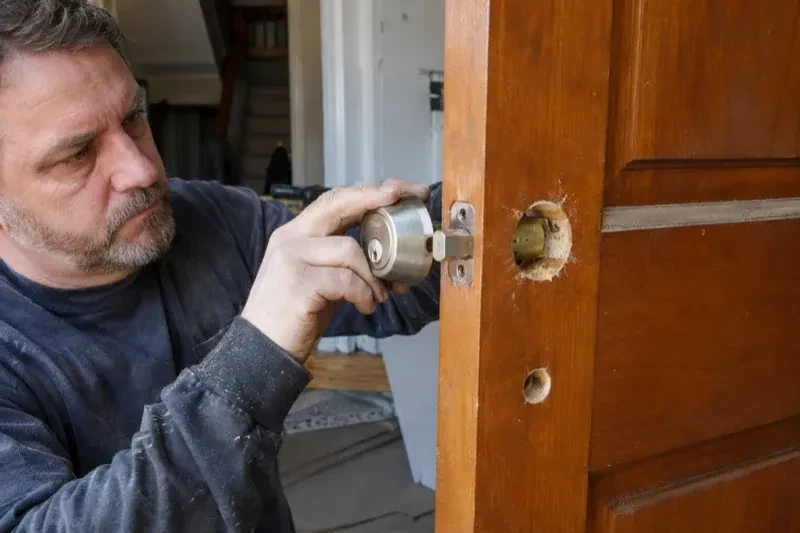
Deadbolt installation puts a solid bolt lock on a door that either has none or has one that is past its useful life. Unlike the spring latch in a knob or lever, a deadbolt is a straight bar of metal that only moves when the key or thumb-turn moves it, so a card slipped into the gap or a shove against the door does nothing. The locksmith bores the door if needed, fits the bolt and cylinder, cuts a proper pocket in the frame and secures a reinforced strike with screws long enough to reach the framing. You are left with a door that locks with a firm, full throw.
How the visit goesThe bolt on the front door is keyed on both sides. Getting out at night means finding the key in the dark, and with a toddler in the house you have decided the inside should turn by hand. You want it done properly, not just swapped.
Burlington
How the visit goes
Exit, fire and who lives here
The last part of the first look is about the people, not the door. The locksmith asks whether this is the door the household leaves through, whether children, older relatives or anyone with limited hand strength use it, and whether it is a rental where the landlord holds keys. A door that serves as a way out gets a thumb-turn planned for it, so nobody has to hunt for a key to leave. A lever thumb-turn is easier for small or stiff hands than a knurled one, and a rental may need a note to the building manager. None of this takes long, and it shapes which box comes off the van.
Assembling the cylinder and thumb-turn
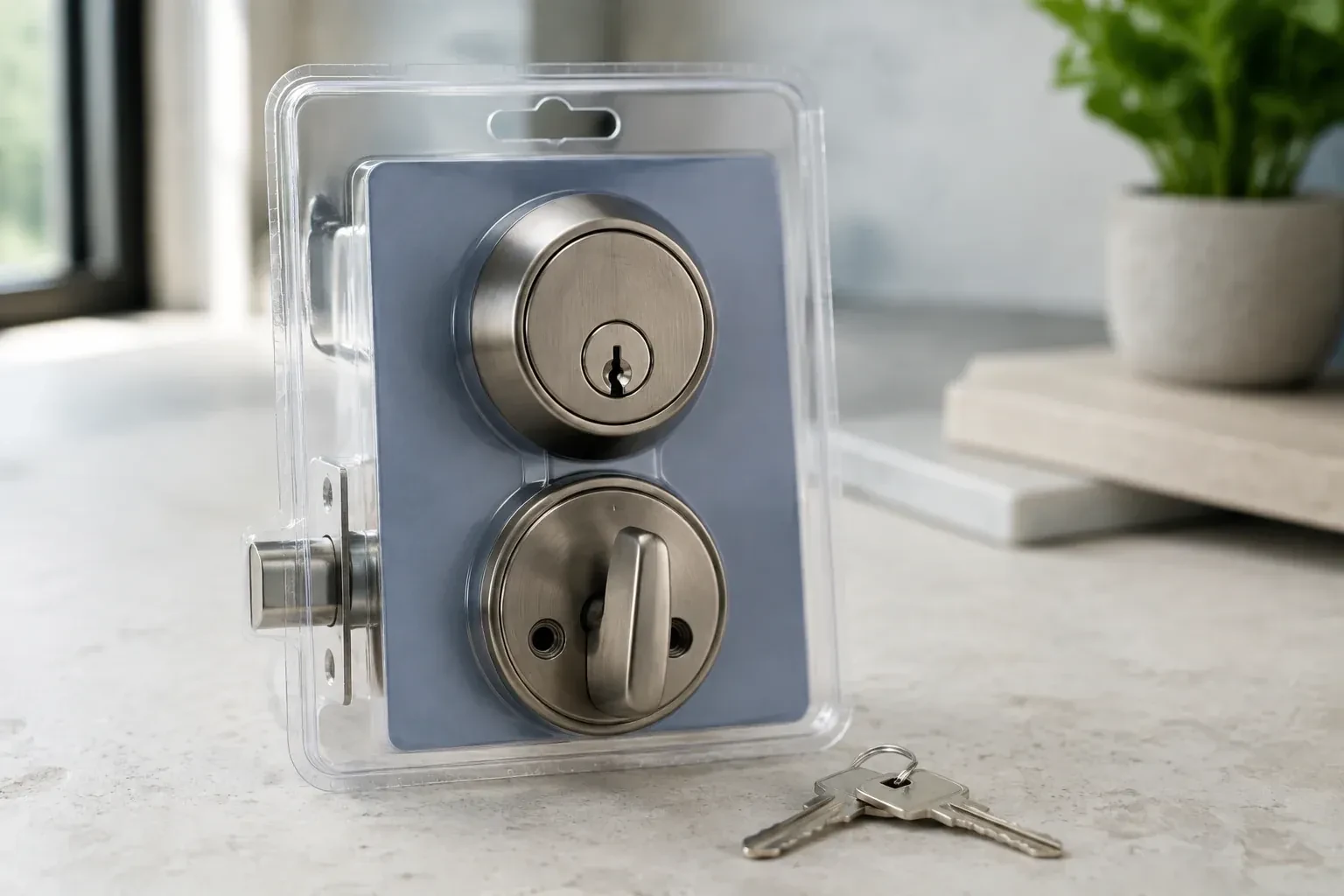
The outside housing goes on first, with its tailpiece threaded through the slot in the bolt cam and its mounting posts through the matching holes. Any plastic alignment bracket that ships with the lock is used on a 54 mm bore and removed on a smaller one. The inside thumb-turn plate is set against the door and the two long tapered screws are driven through it into the outside housing, snug rather than crushed, so the housings pull tight to the door without distorting the mechanism. The locksmith turns the thumb-turn before the door is closed to confirm the bolt throws its full length and returns without a catch.
A safer way out as well as a stronger way in
With a thumb-turn inside, everyone in the household can leave through this door without hunting for a key, day or night. The locksmith walks the family through the thumb-turn and shows children how it turns. If a double-cylinder bolt was replaced, the inside key is no longer needed at all and can be retired. Where glass sits near the lock, whatever measure you agreed on, a thumb-turn that locks with its own small key, a laminated pane, or a tested security-film system that can delay an arm's reach, is in place, so security did not come at the cost of a clear way out.
Deadbolt Installation
In the van
- Manufacturer's bore template
- Dry PTFE lubricant
- Sharp chisel and mallet
- 25 mm auger bit
- Reinforced strike plate
What affects the quote
Same fees day, night or weekend
1Glass near the lock
A captive thumb-turn, laminated glass, security film or a relocated bolt height each carry their own cost, and the choice you make about glass shapes that part of the quote.
2Hardware supplied by you or by the locksmith
If you have already bought the lock, the quote covers labour and any adaptation of the door to that kit. Hardware supplied from the van is listed separately with its grade and finish.
3Removing and disposing of the old hardware
Some visits end with the old deadbolt and strike left with the homeowner, and others ask for it to be removed and hauled away. Taking the old hardware away adds a small amount of time and is agreed before the new deadbolt goes in.
Deadbolt Installation: questions
How long should the bolt be?
The bolt should extend at least 25 mm into the frame, which is the standard throw for a dwelling's entrance doors and the length most residential deadbolts provide. Part of the bolt stays inside the door for support while the rest sits in the pocket. A hardened steel insert that spins under a saw blade is a common feature worth having on doors that face a street or laneway.
How do I look after a deadbolt once it is installed?
Very little is needed. Each spring and autumn, lock the door from inside and feel whether the bolt still goes home without the door being pulled; if it hesitates, the door has moved with the season and a small strike adjustment restores it. Whatever lubricant the lock's own maker specifies keeps it smooth, often a dry PTFE or graphite type in the keyway and along the bolt, though some cylinders are meant to be serviced with oil. In winter, wipe road salt off the outside trim to protect the finish.
Should I choose a single-cylinder or a double-cylinder deadbolt?
For any door people leave the house through, a single cylinder with an inside thumb-turn is the sensible choice, and provincial building rules for dwellings call for exit doors that open from inside without a key. Double-cylinder bolts are keyed on both faces and are sometimes proposed where glass is near the lock, but a captive thumb-turn, laminated glass, or a tested security-film system with its specified attachment, addresses that without a key on the inside.
Change or Rekey Locks
- Lock Replacement & UpgradeThe century home's original mortise lock takes a key the size of a spoon, sticks in humid weather…
- Vintage Mortise Lock ServiceThe knob flops loose on its spindle and never springs back to level.
- Smart Lock InstallationYour mother still lives on her own, and the personal support worker, the pharmacy delivery and two…
Deadbolt Installation near you
The lock services offered in Burlington are grouped the way a door is used. Getting back in when you are locked out. Deciding who holds a working key. Upgrading the hardware so the door resists more than a casual try. Keeping commercial entrances working. Opening and maintaining safes. Each is described below.