High security · Burlington
Safe Installation & Servicing
A community group counts the weekend's raffle and bake-sale cash on a kitchen table, then carries it home in a tote bag until the bank opens Monday, because there has never been anywhere safer to leave it.
Safe Installation & Servicing
In plain words
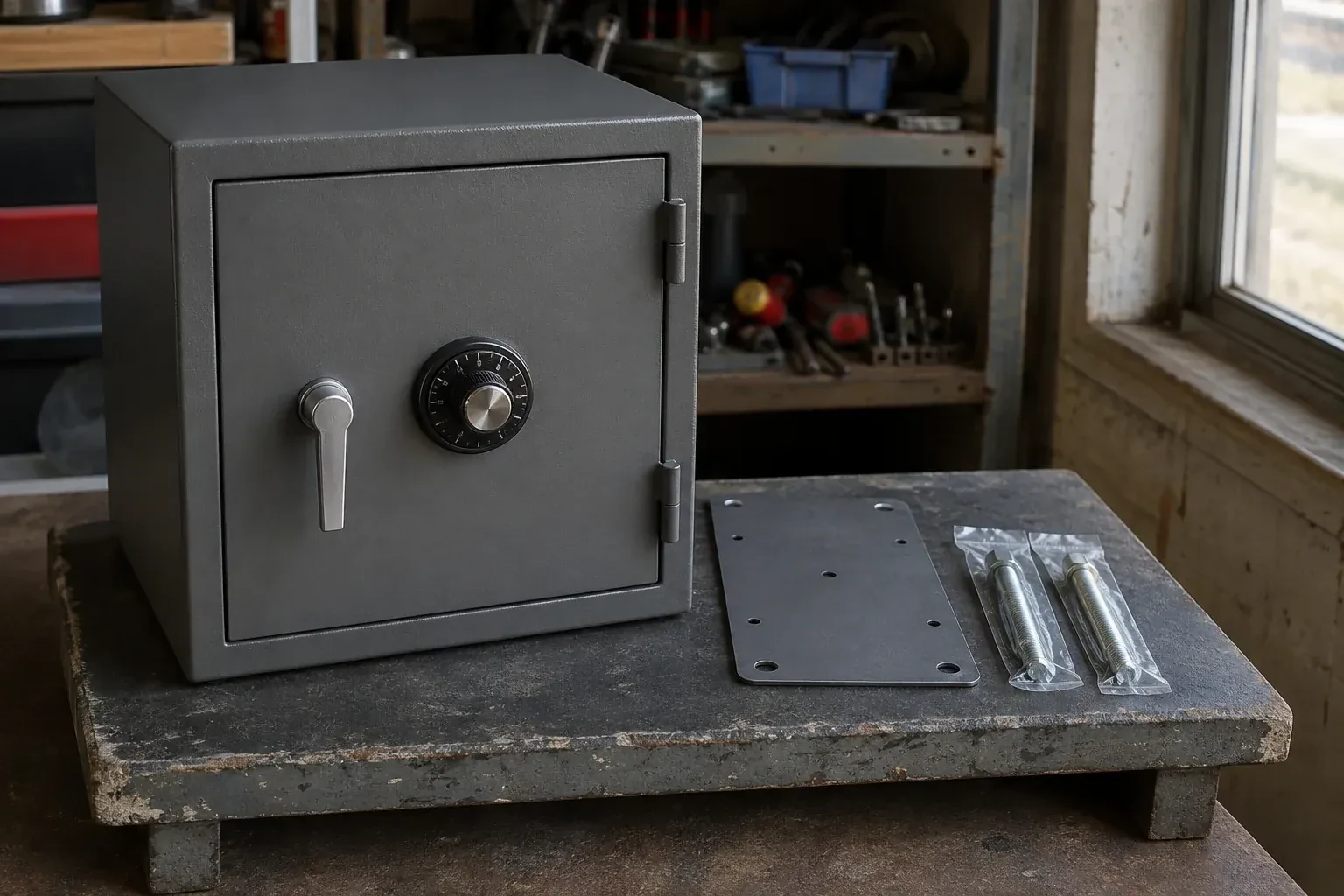
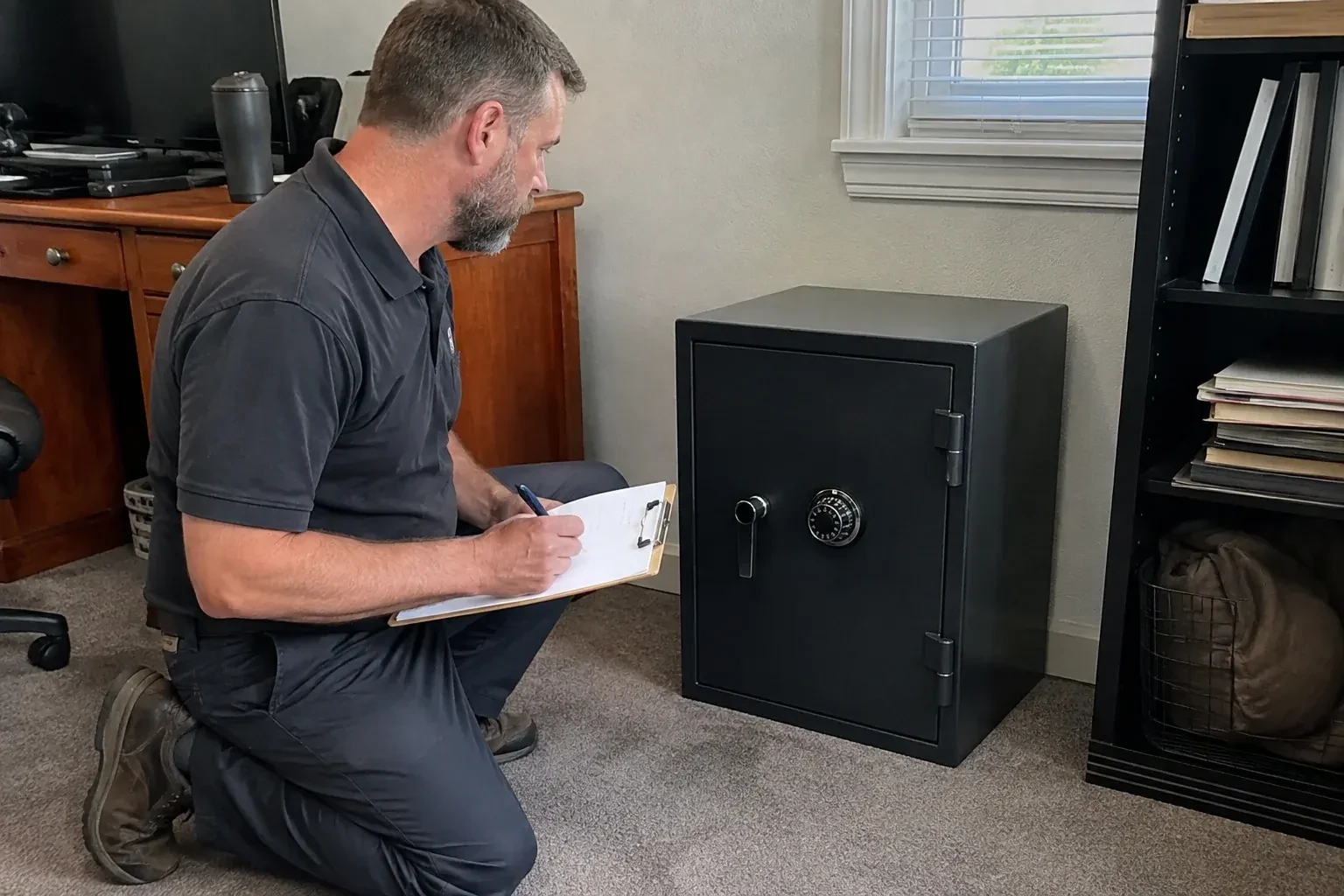
For a household bringing in its first real safe, the service covers everything between the empty spot on the floor and a working, anchored unit with a combination only the family knows. The locksmith walks through what the safe needs to hold, checks the floor or wall it will sit against, positions and levels it, and secures it with anchor bolts suited to that surface. The lock is set and cycled several times with the owner watching, so the last step of the visit is confirming, together, that it opens and closes exactly as it should.
How the visit goesA homeowner inherited a heavy old dial safe from a parent's house, moved it into the new place, and has no idea whether the bolt-work still works, whether the lock is sound, or how it should be anchored.
Burlington
How the visit goes
What kind of lock is already, or will be, on the door
A mechanical dial and an electronic keypad are serviced differently, so the lock gets identified early. On a new installation this is a straightforward choice by the owner. On an existing safe, the locksmith checks whether the dial turns smoothly through a full combination, whether an electronic keypad still lights up and accepts a code, and whether a hidden mechanical override exists behind the keypad in case the batteries run flat. Any handle that binds or clicks without retracting the bolt gets traced back to the lock before the rest of the service continues.
Setting it level and in its final position
Once the safe is on site, it is moved into position with a hand truck, dolly, or rigging suited to its weight, protecting door frames and flooring along the way rather than dragging it across a room. It is set level using shims where the floor is slightly uneven, since a safe that sits even a little off level can bind its own bolt-work over time. The final position also leaves enough clearance for the door to swing fully open and for anchor bolts to be reached from underneath or behind.
Paperwork worth keeping somewhere other than inside the safe
The model number, the burglary and fire ratings, and a note of how and where the unit was anchored are all details worth keeping on file, ideally somewhere other than locked inside the safe itself. An insurer asking about coverage for cash or valuables will often want exactly this information, and having it ready saves a search through old boxes later. A few photographs taken during installation, showing the anchoring and the rating label, cover most of what gets asked for afterward.
Safe Installation & Servicing
In the van
- Level and floor shims
- Mounting plate
- Wood subfloor lag bolts and washers
- Moving dolly and floor protection
- Desiccant packets
What affects the quote
Same fees day, night or weekend
1An insurer's or head office's stated requirement
Some businesses are told by a policy or a head office exactly what rating a safe on the premises needs to meet, which narrows the choice of unit before other factors are weighed.
2Floor or wall construction
Solid concrete, a wood subfloor reaching into joists, and tile each call for a different anchoring approach and different hardware, and the substrate is confirmed before any drilling begins.
3Requests for concealment
Fitting a safe into a closet floor, a recessed wall cavity, or behind a built-in panel takes more planning than a straightforward open placement, and can limit which units will actually fit.
Safe Installation & Servicing: questions
What kind of floor can a safe be anchored to?
Solid concrete is the most straightforward surface, taking a masonry anchor bolt directly. A wood subfloor works too, provided the anchoring reaches into the floor joists beneath the surface layer rather than just the plywood or the flooring on top. Tile is the awkward case, since a bolt through it tends to crack the surrounding tiles, and an alternative anchoring point or a different spot in the room is usually the better route there.
How much weight does a filled safe put on the floor?
It depends entirely on the unit's size and construction, since the steel body itself usually weighs far more than whatever ends up inside it. A small document safe and a large commercial unit sit at very different points on that scale. Confirming the safe's own weight before delivery, and checking it against the floor it will sit on, is part of the assessment rather than something guessed at on arrival.
What is involved in servicing an older safe instead of replacing it?
Servicing works through the same checks as a new installation in reverse: the bolt-work is opened, cleaned, and lubricated, the lock is tested and adjusted if it binds, the anchoring underneath is confirmed or added if it was never done, and batteries are replaced if the lock is electronic. Many older safes have solid steel bodies that outlast the mechanism inside them, which makes servicing a practical route rather than starting over.
High Security Locks
Safe Installation & Servicing near you
The lock services offered in Burlington are grouped the way a door is used. Getting back in when you are locked out. Deciding who holds a working key. Upgrading the hardware so the door resists more than a casual try. Keeping commercial entrances working. Opening and maintaining safes. Each is described below.