Change or rekey · Burlington
Vintage Mortise Lock Service
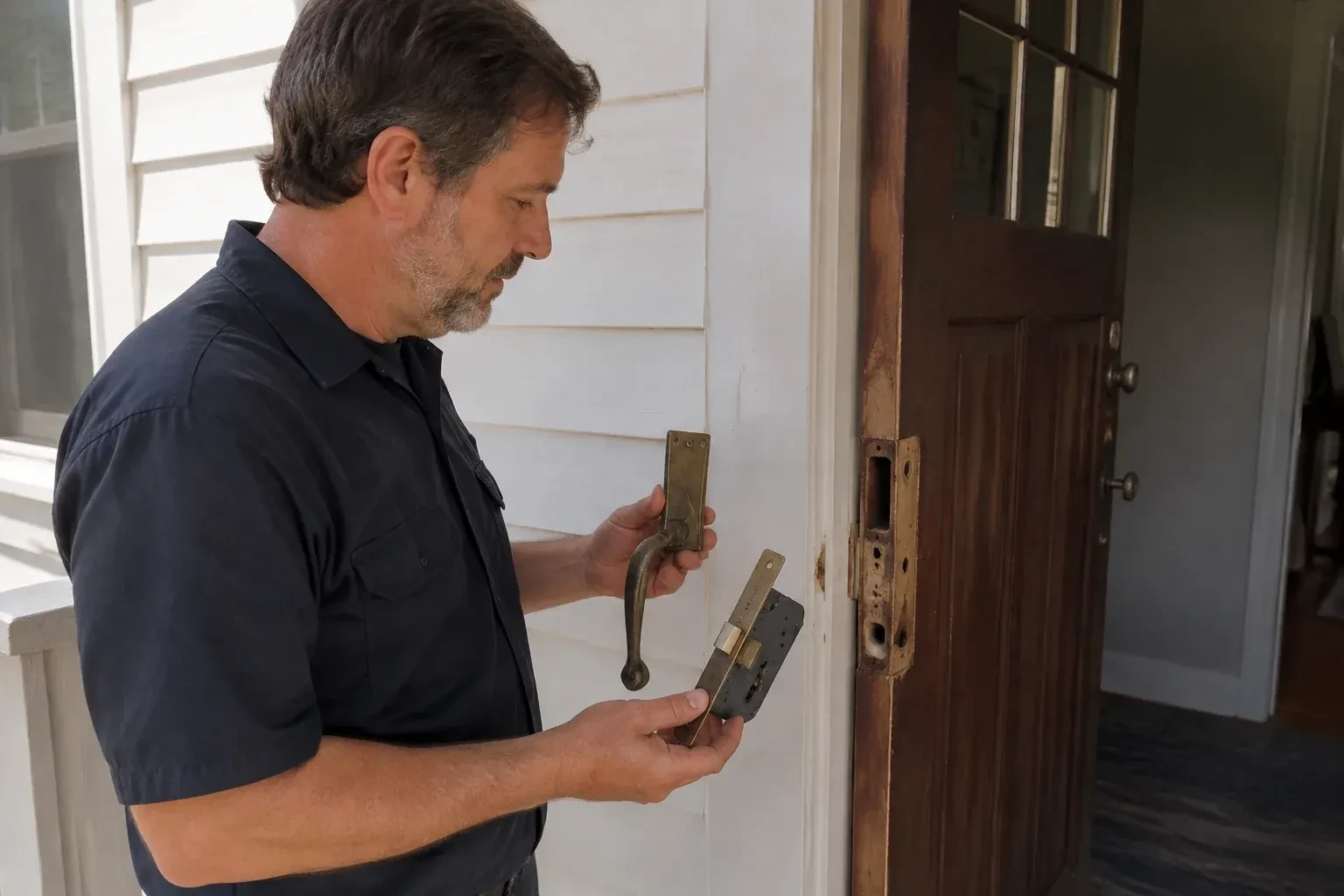
The knob flops loose on its spindle and never springs back to level. When you turn it the latch pulls in, but you have to push the knob back yourself, and lately the latch has started staying inside the door instead of catching.
Vintage Mortise Lock Service
In plain words
Most old mortise locks fail for boring reasons. A coil spring that has been compressed a hundred thousand times since the house was built finally breaks, or the grease inside the case dries into something like wax and the levers stick in it. Neither justifies cutting a new hole in a solid oak door. The service opens the case, cleans out the old lubricant, replaces the springs with the right size, matches any worn follower or lever and lubricates the mechanism lightly. The same case goes back into the same pocket, and the knob returns to level with the crisp snap it had decades ago.
How the visit goesYou bought a house with its original hardware and a bag of loose keys. Some open interior doors, some fit nothing, and the front door lock has a keyhole shaped for a key you do not have. You would like the original lock kept and made to work.
Burlington
How the visit goes
Bit key or cylinder
Older mortise locks come in two families, and the check sorts out which one is on the door. A keyhole shaped like a small keyhole silhouette takes a bit key, the skeleton key style, and the case works on wards and levers that the key's bit must match. A round face on the door with a slot for a flat key is a pin-tumbler cylinder threaded into the case. The distinction matters for everything that follows: how a lost key is replaced, whether the lock can be rekeyed, and what to do if the mechanism is worn out. It also settles whether a spare can be filed on the bench or cut on a key machine.
Inside the case on the bench
With the cover screws out, the case opens like a book: the latch bolt with its spring, the hub the spindle passes through, the deadbolt with its lever or tumblers, and the springs holding each in place. The locksmith notes what is broken, worn or merely stuck, then cleans the case with solvent and a brass brush until the old grease and rust are gone; old paint on the hardware is treated as a possible lead hazard and cleared with contained, lead-safe methods rather than dry brushing. Parts are cleaned individually, burrs are dressed off the bolts, and the hub square is checked against a fresh spindle to see whether it has rounded.
Watching the door through the seasons
The lock is aligned to the door as it hangs today, and a solid wood door in an older home will move again. Through a humid summer it swells, through the heating season it shrinks, and each year the hinges settle a fraction. Twice a year, close the door and try the latch and bolt; if either has started to scrape or needs the door lifted, the strike wants a small adjustment or the hinge screws want snugging, which is a five-minute job. Doing that early keeps the rebuilt case from being strained, and it is the single habit that makes a vintage lock last another few decades without fuss.
Vintage Mortise Lock Service
In the van
- Hardwood dowel and wood glue
- Warding files
- Bit key blanks
- Cylinder set screw
- Spindle and knob set screws
What affects the quote
Same fees day, night or weekend
1Keying doors alike
Bringing several interior locks onto one bit key, or several cylinders onto one flat key, is extra bench work per lock and is simplest to arrange while all the cases are out on the same visit.
2Condition of the wood
Stripped screw holes, a loosened pocket or a split at the door edge need dowelling, shimming or gluing before the case can be trusted. That woodwork is quoted once the locksmith has seen the pocket empty.
3How many keys you want
Bit keys are made individually by hand and cylinder keys are cut per copy, so the count you ask for is a line of its own. Decide who in the household needs one before the visit.
Vintage Mortise Lock Service: questions
Can a modern cylinder be fitted to my old mortise lock?
Often, on cases that already take a threaded cylinder. Mortise cylinders are made in standard thread sizes and lengths with different cam shapes, and a new one is selected to match the case and the door thickness. That gives you keys cut on a machine and the option of keying the door alike with the rest of the house. A bit-key case has no cylinder to swap; its keys are made on the bench instead.
Can the work be done with the lock left in the door?
Rarely, and it is not the better route. Almost everything that fails is inside the case, and the case only opens once it is out of the pocket, which takes a few minutes and leaves no mark. Working through the keyhole with an unapproved or over-applied spray tends to wash out what little lubricant should stay and gums the levers later. Removing the case, cleaning it properly and refitting it is the repair that lasts.
Can the lock be made more secure while keeping it original?
Yes, within reason. A later mortise case can take a modern high-security cylinder of the right thread and cam, chosen for its pick resistance; stopping casual key copying is a separate question, answered by fitting a restricted or patented key system alongside it. Longer screws into the strike and a properly seated deadbolt add more than most people expect. For a bit-key lock, the practical gains are a full-throw deadbolt and a good strike; if more is wanted, a separate modern deadbolt above it leaves the original lock untouched.
Change or Rekey Locks
Vintage Mortise Lock Service near you
The lock services offered in Burlington are grouped the way a door is used. Getting back in when you are locked out. Deciding who holds a working key. Upgrading the hardware so the door resists more than a casual try. Keeping commercial entrances working. Opening and maintaining safes. Each is described below.