Lockouts · Aldershot
Business Lockout Service in Aldershot
The key went in stiffly, turned a quarter of the way, and came out in two pieces. Half of it is still inside the cylinder of the aluminium storefront door, and the deadbolt is hooked firmly into the frame.
Business Lockout Service
In plain words
Heavy commercial doors move, and a good share of business lockouts are really door problems. A glass storefront door hangs on pivots or a continuous hinge that wear with thousands of openings a week, and once the door drops a few millimetres the hookbolt or latch binds against its strike. A hydraulic closer that has stiffened in the cold or lost its adjustment leaves a door that never latched properly the night before. Part of a lockout visit is reading the door: lifting it back into line, adjusting the strike and closer, and making sure the lock is asked to do only what a lock should do.
How the visit goesThe heavy glass door has been scraping the threshold for weeks. This morning the key turns, you can hear the bolt trying to move, but it is jammed hard in the strike and the door stays shut no matter how the handle is pulled.
Aldershot
How the visit goes
Weather, salt and wear on an exposed lock
A storefront cylinder lives a hard life: sidewalk salt, slush, rain and a thousand key turns a month. In winter the locksmith checks for frost on the cylinder face, tests how far the key seats, and judges whether cold grease or real ice is holding the plug. In any season the keyway is inspected for grit and a worn key is compared with a fresh one, since a copy of a copy stops lifting the pins cleanly long before it breaks. This tells the locksmith whether a patient thaw, a cleaning and dry lubricant, or a new cylinder is the right response, and what to leave behind so the same morning is not repeated.
Non-destructive first, on every commercial door
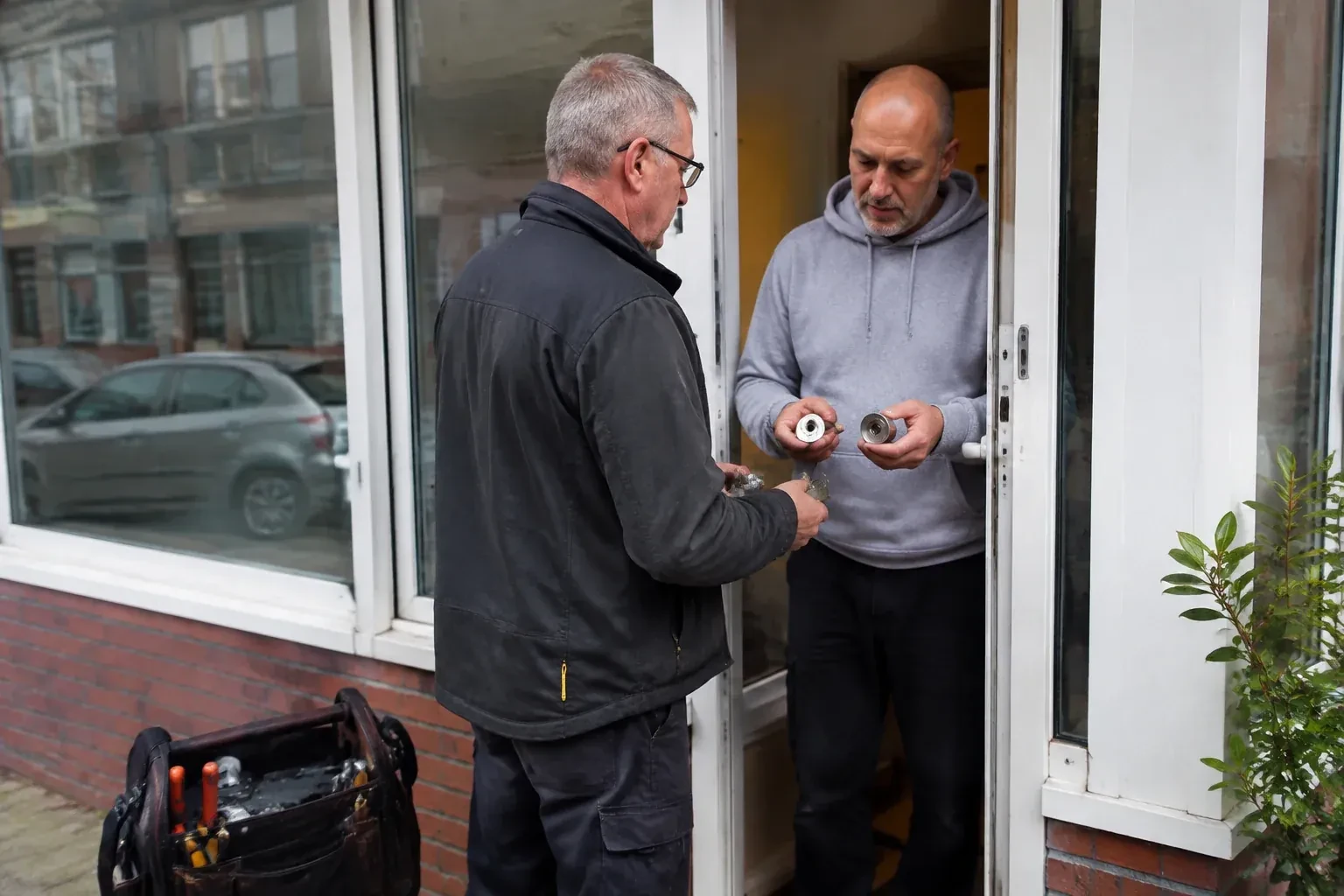
Commercial cylinders are built to a higher standard than most residential ones, but the order of work is the same. The locksmith begins with methods that operate the mechanism as a key would: picking or decoding the mortise or rim cylinder, or pulling a removable core with a control key when the building uses one. Next come bypasses that suit the specific hardware without cutting anything. Drilling sits at the end of the list and is discussed before it begins, aimed only at the cylinder, with a replacement fitted in the same visit. Working in this order keeps the storefront, the trim and the lock body as they were, and the business back on its own keys.
A written record for the business file
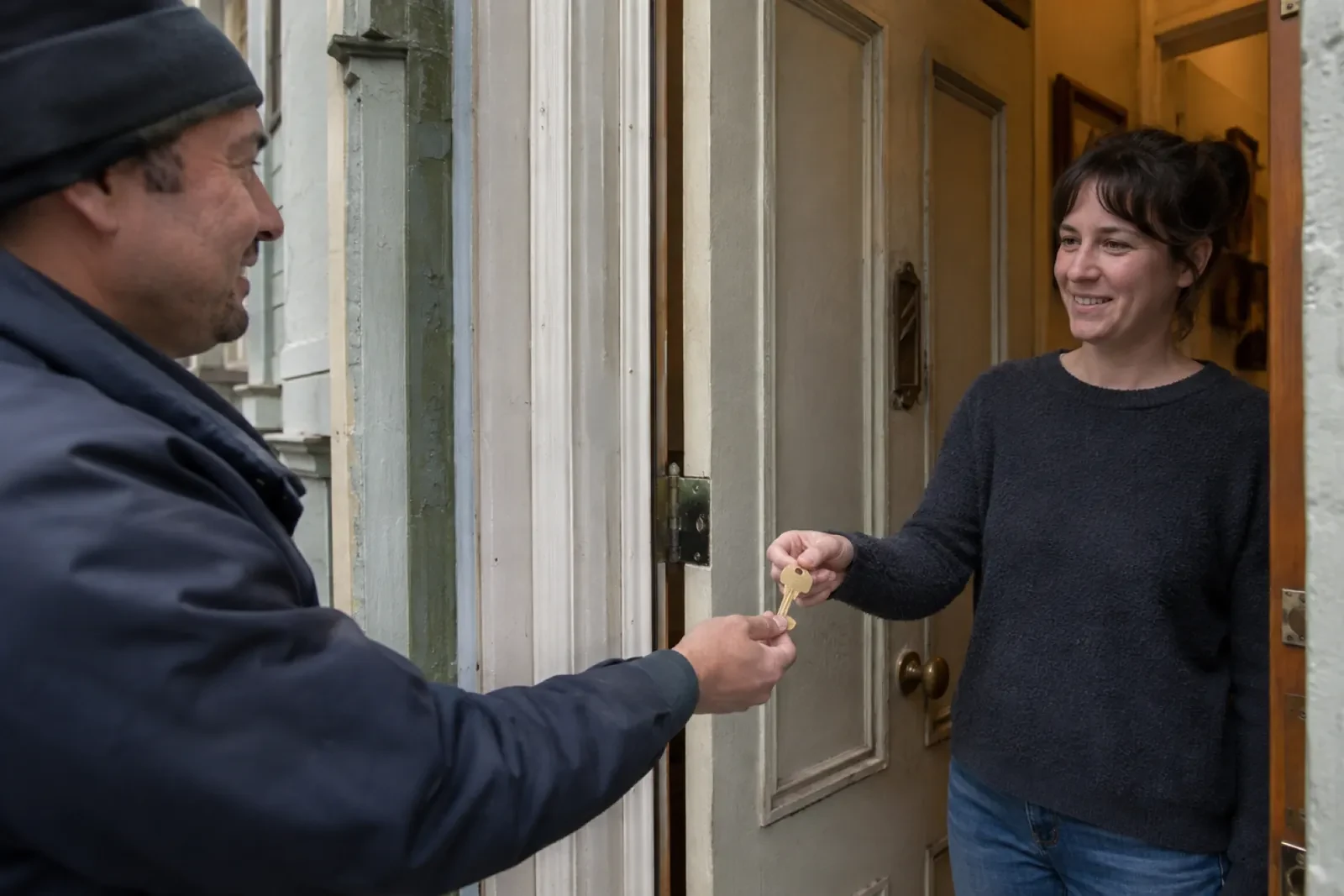
You leave with a plain account of the visit: which door was opened, the method used, whether any cylinder was drilled and replaced, what hardware was fitted, how many keys were cut and to whom they were handed. It notes the condition the hardware was found in, including anything worn or damaged before the locksmith arrived. Property managers ask for this when a unit's locks change, insurers ask for it after a loss, and franchise head offices ask for it as a matter of routine. It also makes the next service call shorter, because the person answering the phone can read what is on the door instead of guessing.
Business Lockout Service
In the van
- Control keys and core-removal tools
- Cylinder decoder and plug spinner
- Replacement mortise and rim cylinders
- Commercial pick and tension tools
- Key blanks and code cutter
What affects the quote
Same fees day, night or weekend
1Upgrades you choose while the locksmith is there
Some businesses use the visit to move to a heavier storefront deadlock, a restricted keyway, interchangeable cores, a lockbox for keyholders or a reinforced strike. None of it is needed to get you open; each is priced as its own option.
2How many doors are involved
One front door is the simplest visit. A front door, a rear exit device, a roll-up padlock and a cash office add hardware to open and, often, cylinders to key alike afterwards.
3Master key system changes
Where the door belongs to a building-wide master key system, changing it means planning with the property manager and pinning cylinders so both your key and the building key still work, which is more careful work than a single rekey.
Business Lockout Service: questions
Will opening our glass storefront door damage it?
In almost every case the door, the glass and the lock are untouched. The mortise cylinder in the narrow stile is picked or decoded so the cam turns exactly as it would for your key, and the hookbolt or latch withdraws. Drilling comes up when a cylinder has seized, is packed with a broken key, or its security features and condition rule out a clean non-destructive opening, and if it comes to that you hear about it first and a new cylinder goes in during the same visit.
An employee left and never returned their keys. Should we rekey?
It is the sensible step, and a lockout visit is a convenient moment for it. Rekeying keeps your existing cylinders and changes the pins so a new key operates them and the unreturned one does nothing. If your doors use interchangeable cores, swapping the core takes minutes. Bring every door that shared the old key onto the new one, count the fresh keys into named hands and start a register so the next departure is a line in a book rather than a call.
I am an employee, not the owner. Can you still open the door for me?
Yes, with the owner or a manager in the loop. Tell the locksmith who can confirm you work there and how to reach them. A call to the business owner, the regional manager or the property manager, ideally on a number that can be looked up rather than one you supply, settles it. Staff on an opening shift arrange this on the phone before the locksmith arrives so nothing waits at the door.
Lockout Services
Business Lockout Service near you
Locks on homes and businesses in Aldershot go through the same stages: they get installed, they wear, they need rekeying when people change, and eventually they are upgraded or replaced. The services here follow that life cycle so you can find the right one at whatever stage your door has reached.