Change or rekey · Burlington
Lock Replacement & Upgrade in Burlington
The century home's original mortise lock takes a key the size of a spoon, sticks in humid weather and has worn its strike to a groove. You want a lock that works every day without giving up the old door.
Lock Replacement & Upgrade
In plain words
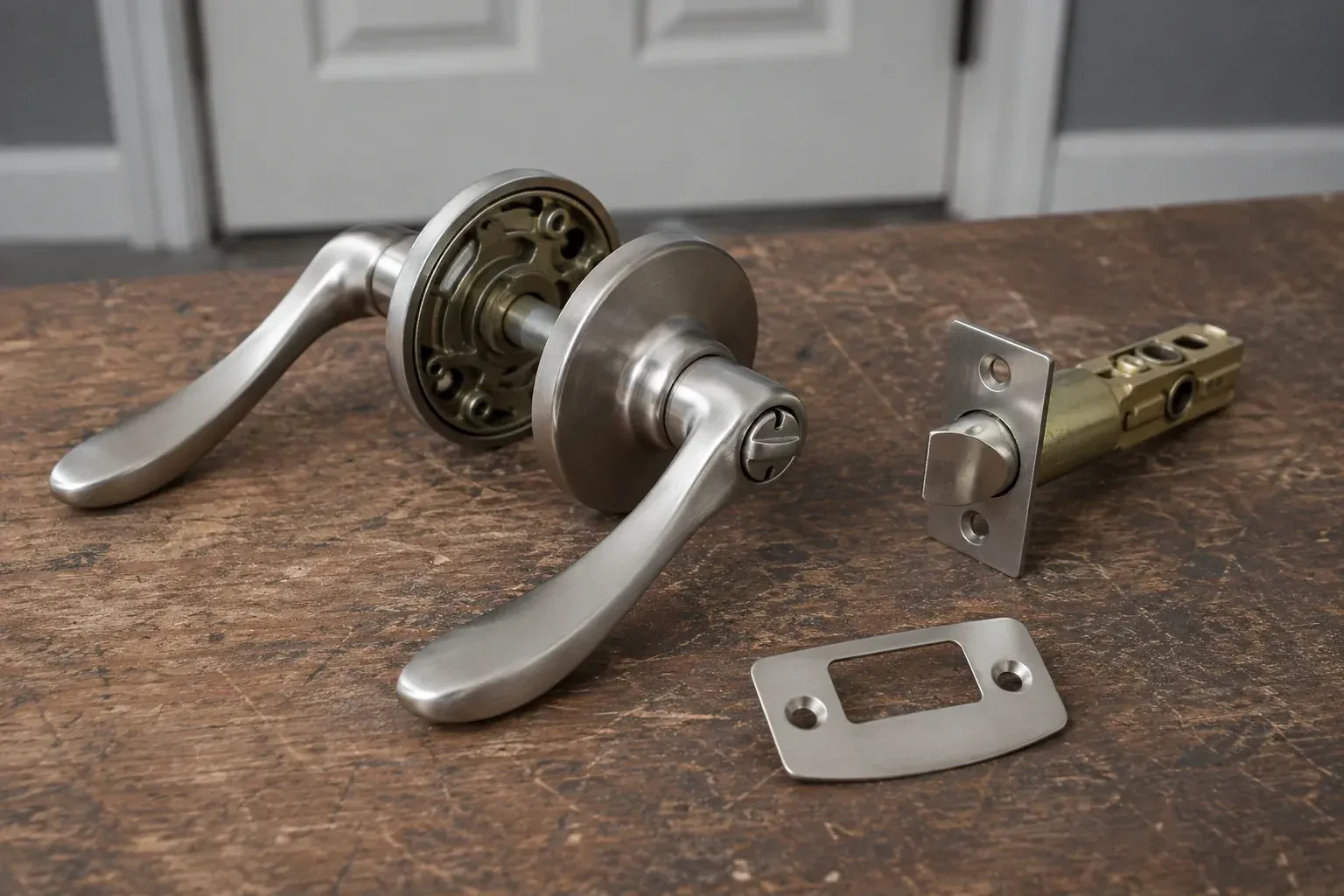
When people say upgrade they usually mean a heavier lock, and there is a real scale behind that word. Builders hardware in North America is graded to ANSI/BHMA standards, with Grade 1 the highest and Grade 3 the lightest, and residential products carry a separate label scoring security, durability and finish. A higher grade certifies stronger performance on the standard's own tests, and moving up often brings a longer hardened bolt, a sturdier housing, pins that resist picking and a strike built to anchor into the framing, though the exact features depend on the model. The locksmith explains which grade fits which door.
How the visit goesThree teenagers, a dog walker, a cleaner and one house key that keeps going missing. You are tired of cutting copies and would rather give each person a code you can switch off, with a proper deadbolt behind it.
Burlington
How the visit goes
The door and frame around the lock
A new lock inherits whatever the door and frame are doing, so both get a look. The locksmith checks whether the door has dropped on its hinges, whether weatherstrip is pushing it out of square, and whether the bolt lands squarely in the strike pocket or rubs its edge. The pocket depth matters as well: a bolt that reaches the back of a shallow pocket is not fully thrown. Hinge screws, a jamb split from an old forced entry and a strike held by short screws are all noted, because the visit will tidy them up so the new hardware works as designed.
Setting and reinforcing the strike
The strike side is where a replacement earns most of its value. With the door closed, the bolt is thrown and its mark checked against the pocket so the strike can be positioned to accept the full throw without rubbing. A shallow pocket is deepened until the bolt seats to its stop. Then a reinforced strike or a strike box is fitted using 75 millimetre screws that pass through the jamb and bite into the framing behind it, which is what stops a jamb splitting under a kick. Where an old forced entry has cracked the wood, it is glued and dowelled or a repair plate is fitted first.
A record of what went on the door
You are told plainly what was fitted: the maker and model, the grade, the function and finish of each lock, whether the strike was reinforced, and how the doors are keyed. The instruction sheets and packaging stay with you, since they carry the model numbers needed for a matching lever or a spare cylinder later. The old hardware is handed over or taken away as you prefer; a sound old cylinder can be worth keeping as a spare. For a rental, this account doubles as the note a landlord or property manager will want about the new keys.
Lock Replacement & Upgrade
In the van
- Boring jig and hole saws
- Knob or lever entry set
- Manufacturer-approved cylinder lubricant
- Handleset with matching deadbolt
- Reinforced strike plate and strike box
What affects the quote
Same fees day, night or weekend
1Authorization needed from a property manager or landlord
A rental or condominium unit sometimes needs sign-off from a property manager or landlord before a lock is changed, and new keys may need to reach more than one party afterward. Confirming who is authorized and who receives keys is worked out before the new hardware goes in.
2Older and mortise hardware
Servicing an original mortise case, sourcing a compatible cylinder or fitting a conversion plate on a century door involves more assessment and fitting time than a standard cylindrical replacement.
3Special-order hardware
Most standard locks come from the van. A specific style, an unusual finish or a restricted system may need ordering, which affects scheduling and is noted in the quote rather than discovered on the day.
Lock Replacement & Upgrade: questions
Can every door in the house work from one key?
Yes, provided the cylinders share a compatible keyway, which the locksmith checks when choosing hardware. New cylinders are pinned on site to a single new key and any existing locks worth keeping are repinned to match. Front, back, side and garage doors commonly end up on one key, and a shed or gate padlock can join them. You then decide how many copies exist and who holds each.
Can I stop people copying my house key?
A restricted keyway helps with that. The key blanks are controlled by the manufacturer and its authorised locksmiths, so a copy generally requires the card, record or authorisation the program uses, cutting down on copies made at an ordinary kiosk. It suits homes where keys are lent to cleaners, contractors or tenants. The cylinders are fitted in the normal way, and you keep the key card safe because it is what future copies depend on.
Do I have to prove I own the home before you change a lock?
The locksmith will ask, and it is a sign of a careful trade. Photo identification with the address, a deed or property tax notice, or a mortgage or insurance document is plenty for an owner. Tenants show a lease and the landlord's consent; landlords show ownership and confirm the tenant will receive keys. It is a short step that protects everyone with a right to that door.
Change or Rekey Locks
Lock Replacement & Upgrade near you
The lock services offered in Burlington are grouped the way a door is used. Getting back in when you are locked out. Deciding who holds a working key. Upgrading the hardware so the door resists more than a casual try. Keeping commercial entrances working. Opening and maintaining safes. Each is described below.